martes, 5 de abril de 2011

World Digital Library


I made a mistake and this address wasn't published in this blog. Sorry about that.
Now you can access to this really interesting link.

World Digital Library


Mission

The World Digital Library (WDL) makes available on the Internet, free of charge and in multilingual format, significant primary materials from countries and cultures around the world.
The principal objectives of the WDL are to:
  • Promote international and intercultural understanding;
  • Expand the volume and variety of cultural content on the Internet;
  • Provide resources for educators, scholars, and general audiences;
  • Build capacity in partner institutions to narrow the digital divide within and between countries.

This Site

The WDL makes it possible to discover, study, and enjoy cultural treasures from around the world on one site, in a variety of ways. These cultural treasures include, but are not limited to, manuscripts, maps, rare books, musical scores, recordings, films, prints, photographs, and architectural drawings.
Items on the WDL may easily be browsed by place, time, topic, type of item, and contributing institution, or can be located by an open-ended search, in several languages. Special features include interactive geographic clusters, a timeline, advanced image-viewing and interpretive capabilities. Item-level descriptions and interviews with curators about featured items provide additional information.
Navigation tools and content descriptions are provided in Arabic, Chinese, English, French, Portuguese, Russian, and Spanish. Many more languages are represented in the actual books, manuscripts, maps, photographs, and other primary materials, which are provided in their original languages.
The WDL was developed by a team at the U.S. Library of Congress, with contributions by partner institutions in many countries; the support of the United Nations Education, Scientific, and Cultural Organization (UNESCO); and the financial support of a number of companies and private foundations.

IRELAND, EMIGRATION AND FILMS ABOUT IMMIGRANTS


We have finally gathered all the documents sent by the 7-9pm group. It's the same material they presented to the class last week and now you have a chance to read it all.
Thanks for your cooperation!

Ireland, immigration & films 7-9

miércoles, 30 de marzo de 2011

Pakistan's secret dirty war

Terrible things are happening in the world, but nobody seems to care!


In Balochistan, mutilated corpses bearing the signs of torture keep turning up, among them lawyers, students and farm workers. Why is no one investigating and what have they got to do with the bloody battle for Pakistan's largest province?

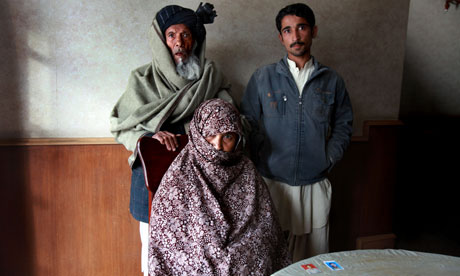
Lala Bibi with her father and son 
Lala Bibi with her father and son Saeed Ahmed – and photographs of her murdered son Najibullah and his cousin, who was also abducted. Photograph: Declan Walsh for the Guardian

The bodies surface quietly, like corks bobbing up in the dark. They come in twos and threes, a few times a week, dumped on desolate mountains or empty city roads, bearing the scars of great cruelty. Arms and legs are snapped; faces are bruised and swollen. Flesh is sliced with knives or punctured with drills; genitals are singed with electric prods. In some cases the bodies are unrecognisable, sprinkled with lime or chewed by wild animals. All have a gunshot wound in the head.
This gruesome parade of corpses has been surfacing in Balochistan, Pakistan's largest province, since last July. Several human rights groups, including Amnesty International, have accounted for more than 100 bodies – lawyers, students, taxi drivers, farm workers. Most have been tortured. The last three were discovered on Sunday.
If you have not heard of this epic killing spree, though, don't worry: neither have most Pakistanis. Newspaper reports from Balochistan are buried quietly on the inside pages, cloaked in euphemisms or, quite often, not published at all.
The forces of law and order also seem to be curiously indifferent to the plight of the dead men. Not a single person has been arrested or prosecuted; in fact, police investigators openly admit they are not even looking for anyone. The stunning lack of interest in Pakistan's greatest murder mystery in decades becomes more understandable, however, when it emerges that the prime suspect is not some shady gang of sadistic serial killers, but the country's powerful military and its unaccountable intelligence men.
This is Pakistan's dirty little war. While foreign attention is focused on the Taliban, a deadly secondary conflict is bubbling in Balochistan, a sprawling, mineral-rich province along the western borders with Afghanistan and Iran. On one side is a scrappy coalition of guerrillas fighting for independence from Pakistan; on the other is a powerful army that seeks to quash their insurgency with maximum prejudice. The revolt, which has been rumbling for more than six years, is spiced by foreign interests and intrigues – US spy bases, Chinese business, vast underground reserves of copper, oil and gold.

martes, 29 de marzo de 2011

Interesting Anecdotes (part 2)

Airports at higher  altitudes require a longer airstrip due to lower air  density.
    
 The University of Alaska  spans four time zones.
  
 The tooth is the only  part of the human body that cannot heal itself.
  
 In ancient Greece ,  tossing an apple to a girl was a traditional proposal of marriage.  Catching it meant she accepted.
  
 Warner Communications  paid $28 million for the copyright to the song Happy  Birthday.
  
 Intelligent people have  more zinc and copper in their hair.
  
 A comet's tail always  points away from the sun.
  
 The Swine Flu vaccine in  1976 caused more death and illness than the disease it was intended to  prevent.
  
 Caffeine increases the  power of aspirin and other painkillers, that is why it is found in some  medicines.
  
 The military salute is a  motion that evolved from medieval times, when knights in armor raised  their visors to reveal their identity.
  
 If you get into the  bottom of a well or a tall chimney and look up, you can see stars, even  in the middle of the day.
  
 When a person dies,  hearing is the last sense to go. The first sense lost is  sight.
   
 In ancient times  strangers shook hands to show that they were  unarmed.
  
 Strawberries are the  only fruits whose seeds grow on the outside.
  
 Avocados have the  highest calories of any fruit at 167 calories per hundred  grams.

 The moon moves about two  inches away from the Earth each year.
  
 The Earth gets 100 tons  heavier every day due to falling space dust.
  
 Due to earth's gravity  it is impossible for mountains to be higher than 15,000  meters.
     
 Mickey Mouse is known as  "Topolino" in Italy.
  
 Soldiers do not march in  step when going across bridges because they could set up a vibration  which could be sufficient to knock the bridge  down.
     
 Everything weighs one  percent less at the equator.
  
 For every extra kilogram  carried on a space flight, 530 kg of excess fuel are needed at  lift-off.
  
 The letter  J does not appear anywhere on the periodic table of the elements.  
  
 And last but  not least:
 In 2011,  July has 5 Fridays, 5 Saturdays, and 5 Sundays. This apparently happens  once every 823 years!  This is called 'money bags'.

lunes, 28 de marzo de 2011

The King's Speech 1939


I have found this really impressive document. If you saw the film 'The King's Speech', I'm sure you "suffered" with him when he had to pronounce his first serious speech to communicate to his country that they had declared the war against Germany on 3rd September 1939.
This is the real speech, where we can see his difficulties to speak but his enormous efforts to make this solemn declaration sound as serious as it was.
I strongly recommend you to listen to it. You also have the complete speech to follow it without any difficulty and a lot more information about the King and his family and life.

George VI speech 1939

jueves, 24 de marzo de 2011

Authors raise doubts over Gove's 50-book challenge

Michael Gove's remark that children should be reading 50 books a year is called into question by authors from Philip Pullman to children's laureate Anthony Browne.

michael gove

 
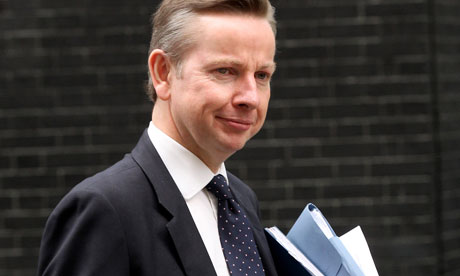
Michael Gove … the education secretary said UK schools need to 'raise the bar' on children's reading.
Education secretary Michael Gove has suggested that children as young as 11 should be reading 50 books a year – and that leading children's authors should recommend them.

Following a tour he made of America's independently-run, state-funded charter schools – including the Infinity Charter School in Harlem, which set its pupils a "50-book challenge" over the course of a year – Gove said that schools in the UK needed to "raise the bar" on children's reading:


"Recently, I asked to see what students were reading at GCSE," Gove said. "I discovered that something like 80-90% were just reading one or two novels – and overwhelmingly it was the case that it included Of Mice and Men. We should be saying that our children should be reading 50 books a year, not just one or two for GCSE."


The education secretary's remarks follow a December report that showed British teenagers slumping from 17th to 25th place in an international league table for reading standards.

But children's laureate Anthony Browne has said Gove's aims are at odds with the library closures happening under his government's watch. He declared himself "surprised" at Gove's comments, "given that the government is cutting library budgets, and that programmes giving free books to children, such as Bookstart, are also being cut."

"It's always good to hear that the importance of children's reading is recognised – but rather than setting an arbitrary number of books that children ought to read, I feel it's the quality of children's reading experiences that really matter," Browne said. "Pleasure, engagement and enjoyment of books is what counts – not simply meeting targets."

Browne's views were echoed by others'. Frank Cottrell Boyce, author of children's novels Cosmic and Millions, said that while Gove's instincts were right, the government's wider actions were "militating against what Gove wants – like closing libraries, which is just a disaster."


Alan Garner, author of children's classic The Weirdstone of Brisingamen, meanwhile, questioned the advisability of turning books into numbers. "Is any number a useful guide?" he asked. "The important aim should be a reading that is wide and deep rather than numerical. In my own primary school years I read everything I could find, which amounted to at least four books a week and as many comics as possible. The Beano and The Dandy were equal with Tarzan of the Apes, Enid Blyton, HG Wells, Kipling, wildlife books, fairy tales, encyclopaedias. This resulted, painlessly, in a large vocabulary, an awareness of differences of style, the absorption of grammar and syntax and an ability to spell."

Philip Pullman, author of the prizewinning His Dark Materials trilogy, agreed - and added a further caveat. "I'm all in favour of children reading books, of course, the more the merrier," he said. "What I'm wary of is that people will start saying that quality is more important than quantity. When it comes to reading books, children should be allowed – and encouraged – to read as much rubbish as they want to. But that can only happen when there are plenty of good books as well as rubbish all around them. Where are they going to get these 50 books a year from?"


Meanwhile, Miranda McKearney, chief executive of the Reading Agency, which runs an annual Summer Reading Challenge in which children are encouraged to read six library books over the holiday, expressed concern over the execution of Gove's ambition. "So often the discussion about how to inspire children to read focuses just on schools, but libraries, and families, have a key role to play," she said. "We won't crack the problems unless we build a more systemic approach."