lunes, 18 de febrero de 2013

PLAYING THE ENEMY (John Carlin) - INTRODUCTION

"Sport has the power to change the world. It has the power to inspire, the power to unite people that little else has ... It is more powerful than governments in breaking down racial barriers." (Mandela)

"Stripped to its essentials politics is about persuading people, winning them over. All politicians are professional seducers."

"Where Mandela - the anti-Hitler - had an edge over the lot of them, where he was unique, was in the scope of his ambition."


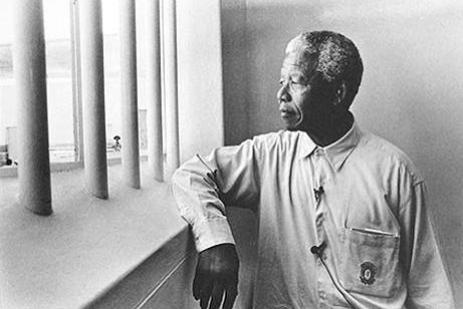
These quotes taken from the introduction of the book will help us understand Mandela's role in South Africa as well as his aim. He knew sport, rugby in this case, could be used to join a country severed in two in a way no one would ever dream of changing. But Mandela was a true politician who used his skills to reach his goal: to have one country for all the citizens of South Africa.


As you read the book, leave here some quotes with a brief explanation of why you chose them.


jueves, 14 de febrero de 2013

JOHN CARLIN. CV


JOHN CARLIN
Born London, 12 May 1956

2011
Book on Rafael Nadal titled “Rafa: my story” co-authored with Nadal.

2004-2010
Book on Nelson Mandela titled ‘Playing the Enemy’ "Invictus" (Penguin Press USA; Atlantic Books, UK/SA/Commonwealth) first published in August 2008, translated into 14 languages, made into a Warner Bros film named ‘Invictus’, 2009 in the US, starring Morgan Freeman and Matt Damon, directed by Clint Eastwood. Released in December 2010 in USA. Released in Europe and the rest of the world in January and February 2010

Senior international writer for El País, the world’s leading newspaper in the Spanish language
Articles for the London Observer, Independent, Sunday Times, New York Times and others
Release of film ‘Die Hard 4’, starring Bruce Willis, based on article in ‘Wired’ magazine in the US, whose rights I sold to 20th Century Fox
 
2004
Published two books, “Heroica Tierra Cruel” (Seix Barral), on Africa, foreword written by Nelson Mandela; and “White Angels” (Bloomsbury) on Real Madrid, published in Britain, Spain, the United States, China, Japan and Brazil
Finalist for 2004 “William Hill British Sports Book of the Year”
Winner 2004 British Press Awards “Food and Drink Writer of the Year”
 
1998-2003
Winner in 2000 of the top Spanish journalism award, the Ortega y Gasset prize, for article on immigration for el País.
Articles for the London Independent; London Daily Telegraph; the London Observer; New Statesman; New York Times, Time magazine, the Wall Street Journal, Folha de Sao Paulo and others.
Interviewer and writer of Emmy-nominated PBS (USA) ‘Frontline’ documentary, ‘the Long Walk of Nelson Mandela’; script writer and consultant for Channel Four television documentary, ‘Kicking the Habit’, on Diego Maradona; interviewer and consultant for Channel Four televisions documentary on England-Argentina soccer rivalry
 
1995-1998
US bureau chief, based in Washington, for the (London) Independent on Sunday.
Articles for Wired; Spin; Conde Nast Traveler; Punch; New Statesman.
Weekly columnist for South Africa’s Sunday Independent.
 
1989-1995
South Africa bureau chief, based in Johannesburg, for the London Independent; three nominations for British foreign correspondent of the year award
Freelance articles for New Republic and others.
A number of TV and radio documentaries for the BBC on Winnie Mandela (Sony Award winner Best Radio documentary), South Africa’s “Third Force” and other topics.
 
1986-1989
Mexico and Central America bureau chief for the London Independent, based in Mexico City and Managua.
BBC radio documentaries on various subjects.
 
1982-1986
Correspondent for Times of London, BBC World Service, ABC Radio (US), CBC Radio (Canada), Toronto Star covering Mexico and Central America, based in Mexico City and,in 1984, San Salvador.
 
1981-1982
Sports reporter, film critic and political writer for Buenos Aires Herald, Argentina.

After this breathtaking CV, you'll probably like to know something else about John Carlin.
If so, click here:

John Carlin's official webpage


martes, 12 de febrero de 2013

INVICTUS


INVICTUS


Out of the night that covers me,
Black as the pit from pole to pole,
I thank whatever gods may be
For my unconquerable soul.

In the fell clutch of circumstance
I have not winced nor cried aloud.
Under the bludgeonings of chance
My head is bloody, but unbowed.

Beyond this place of wrath and tears
Looms but the Horror of the shade,
And yet the menace of the years
Finds and shall find me unafraid.

It matters not how strait the gate,
How charged with punishments the scroll,
I am the master of my fate:
I am the captain of my soul.


This is a Poem 'Invictus' (Unconquered, Undefeated) by William Henley. Great South African Leader Nelson Mandela (Madiba) was inspired by the poem, and had it written on a scrap of paper on his prison cell while he was incarcerated for 27 years on Robben Island.
 

"Invictus" is a short poem by the English poet William Ernest Henley (1849–1903). At the age of 12, Henley became a victim of tuberculosis of the bone.

A few years later the disease progressed to his foot, and physicians announced that the only way to save his life was to amputate directly below the knee.

In 1867 he successfully passed the Oxford local examination as a senior student.

In 1875 he wrote the "Invictus" poem from a hospital bed. It was first published in 1888 in Henley's Book of Verses, where it was the fourth in a series of poems entitled Life and Death (Echoes).

It originally bore no title. The familiar title "Invictus" (Latin for "unconquered") was added by Arthur Quiller-Couch when he included the poem in The Oxford Book of English Verse (1900)

Despite his disability, Henley survived with one foot intact and led an active life until the age of 53.

lunes, 11 de febrero de 2013

REASERCH ABOUT TEACHER MAN Group M & W


Finally we have the result of the research made by the different groups in the class.
I hope you enjoy their summaries.
Soon, you'll have the possibility of recording what you presented to the class.


Ireland in the 1930s (M & W)

Glossary Teacher Man (M & W)

Immigration in the 50s (M & W)


lunes, 4 de febrero de 2013

KEY TO THE GRAMMAR CHECKER

Once you have done the corresponding exercises in the Grammar Checker, you can make corrections with the key I attach.

Please, do it little by little, but do it all!

Grammar Checker Advanced Key


Thanks to Manuel and Justo, we have detected a couple of mistakes in the key of the exercises in section 5B. Here you have the right answers:

5B
a) 7 : X Did you use to eat...?
b) 5 : 's used to being ...
    6 : used to wear..., didn't you?

If you happen to find more, please, let me know and we'll add it to this post. Thanks for your help!


EXTRA ACTIVITIES AFTER READING TEACHER MAN

Now that you have finished the book and we have analyzed it chapter by chapter, you are invited to do some extra activities.

- Watch this video (or any other you can find on the Internet)

Frank McCourt at the NYS writers’ Institute in 2006


- now, had you had the chance to interview him, what other questions would you have liked to ask him?


Leave your comments, thoughts, ideas and questions on the blog!