martes, 8 de mayo de 2018

Cancer: 'If exercise was a pill it would be prescribed to every patient'

Leading Australian researchers back world-first campaign for activity to be part of any treatment 

Exercise should be prescribed to all cancer patients, and not to do so would be harmful, some of Australia’s leading experts on cancer have warned.
The Clinical Oncology Society of Australia has launched its position statement on the role of exercise alongside surgery, chemotherapy or radiation in cancer care.
Endorsed by a group of 25 influential health and cancer organisations, including Cancer Council Australia, it is the first researcher-led push anywhere in the world for exercise to be an essential component of treatment.

The lead author, Prof Prue Cormie from the Australian Catholic University, said the statement was based on “indisputable” evidence. “Really we are at the stage where the science is telling us that withholding exercise from cancer patients can be harmful,” Cormie said.
“Exercise is the best medicine someone with cancer can take in addition to their standard cancer treatments. That’s because we know now that people who exercise regularly experience fewer and less severe treatment side-effects; cancer-related fatigue, mental distress, quality of life.”
They also have a lower risk of their cancer coming back or dying from the disease, Cormie said.
“If the effects of exercise could be encapsulated in a pill, it would be prescribed to every cancer patient worldwide and viewed as a major breakthrough in cancer treatment,” she writes for the Conversation. “If we had a pill called exercise it would be demanded by cancer patients, prescribed by every cancer specialist, and subsidised by government.”
Gone are the days of wrapping cancer patients in “cotton wool”, according to Dr David Speakman, chief medical officer at the Peter MacCallum Cancer Centre.

“Our attitudes to treating cancer, what it takes to give people their best chance at survival, have to change. All cancer patients will benefit from an exercise prescription.’
Nicole Cooper, 33, was diagnosed with stage 4 bowel cancer last year, and believes one reason she is still alive is the exercise regime she followed while undergoing treatment. “When I received a terminal cancer diagnosis, I was prescribed two potentially lifesaving cancer treatments: chemotherapy and exercise,” she said.

“A year later, I am in remission, having taken just as much exercise as I have chemotherapy.”
Cormie said the evidence-based guidelines recommended people with cancer be as physically active as their current ability and conditions allowed. For significant health benefits, they should aim for at least 150 minutes of moderate intensity aerobic exercise weekly and two to three resistance exercise sessions (such as weightlifting).

“These recommendations should be tailored to the individual’s abilities to minimise the risk of complications and maximise the benefits.”
The Guardian with Australian Associated Press
7th May 2018


miércoles, 2 de mayo de 2018

Thursday 5th May: it's our Book's Day

Tomorrow we'll spend part of the class talking about the books you chose and read. Don't forget to take them with you to show your classmates.

We'll increase the section of 'Recommended Books' thanks to your contribution.

Resultado de imagen de books

Scientists accidentally create mutant enzyme that eats plastic bottles

The breakthrough, spurred by the discovery of plastic-eating bugs at a Japanese dump, could help solve the global plastic pollution crisis


Resultado de imagen de plásticos en el mar
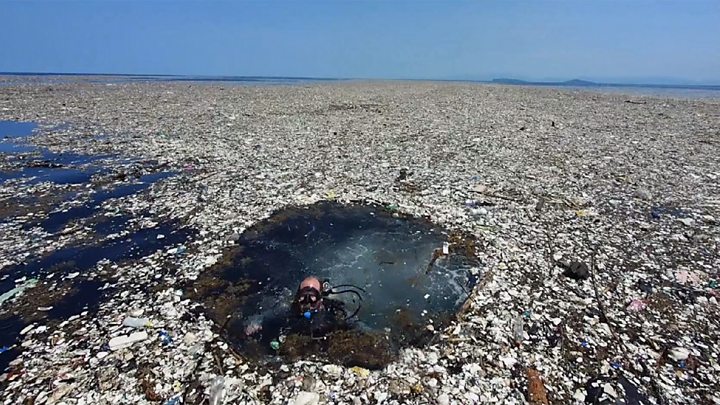
Scientists have created a mutant enzyme that breaks down plastic drinks bottles – by accident. The breakthrough could help solve the global plastic pollution crisis by enabling for the first time the full recycling of bottles.
The new research was spurred by the discovery in 2016 of the first bacterium that had naturally evolved to eat plastic, at a waste dump in Japan. Scientists have now revealed the detailed structure of the crucial enzyme produced by the bug.
The international team then tweaked the enzyme to see how it had evolved, but tests showed they had inadvertently made the molecule even better at breaking down the PET (polyethylene terephthalate) plastic used for soft drink bottles. “What actually turned out was we improved the enzyme, which was a bit of a shock,” said Prof John McGeehan, at the University of Portsmouth, UK, who led the research. “It’s great and a real finding.”

The mutant enzyme takes a few days to start breaking down the plastic – far faster than the centuries it takes in the oceans. But the researchers are optimistic this can be speeded up even further and become a viable large-scale process.
“What we are hoping to do is use this enzyme to turn this plastic back into its original components, so we can literally recycle it back to plastic,” said McGeehan. “It means we won’t need to dig up any more oil and, fundamentally, it should reduce the amount of plastic in the environment.”
About 1m plastic bottles are sold each minute around the globe and, with just 14% recycled, many end up in the oceans where they have polluted even the remotest parts, harming marine life and potentially people who eat seafood. “It is incredibly resistant to degradation. Some of those images are horrific,” said McGeehan. “It is one of these wonder materials that has been made a little bit too well.”
However, currently even those bottles that are recycled can only be turned into opaque fibres for clothing or carpets. The new enzyme indicates a way to recycle clear plastic bottles back into clear plastic bottles, which could slash the need to produce new plastic.
“You are always up against the fact that oil is cheap, so virgin PET is cheap,” said McGeehan. “It is so easy for manufacturers to generate more of that stuff, rather than even try to recycle. But I believe there is a public driver here: perception is changing so much that companies are starting to look at how they can properly recycle these.”
The Guardian, April 2018