
See the other graffiti he's made in different Ukrainian cities:

Here you have a really interesting article with questions and answers on a topic we are all interested in.
Save gas for a safe winter to read it.

We live in a world of great linguistic diversity. More than half of the world’s population grows up with more than one language. There are, on the other hand, language communities that are monolingual, typically some parts of the English-speaking world.
In this case, bilingualism or multilingualism can be seen as an extraordinary situation – a source of admiration and worry at the same time. But there are communities where bilingualism or multilingualism are the norm – for example in regions of Africa. A Cameroonian, for example, could speak Limbum and Sari, both indigenous languages, plus Ewondo, a lingua franca, plus English or French, the official languages, plus Camfranglais, a further lingua franca used between anglophone and francophone Cameroonians.
On a smaller scale, we all know families where bilingualism or multilingualism are the norm, because the parents speak different languages or because the family uses a language different from that of the community around them.
How difficult is it for a child to grow up in such an environment? And what are bilingual children capable of? Well, they are capable of quite a lot, even at a very young age. They can understand and produce expressions in more than one language, they know who to address in which language, they are able to switch very fast from one language to the other.
Read the complete article in 'The Conversation':
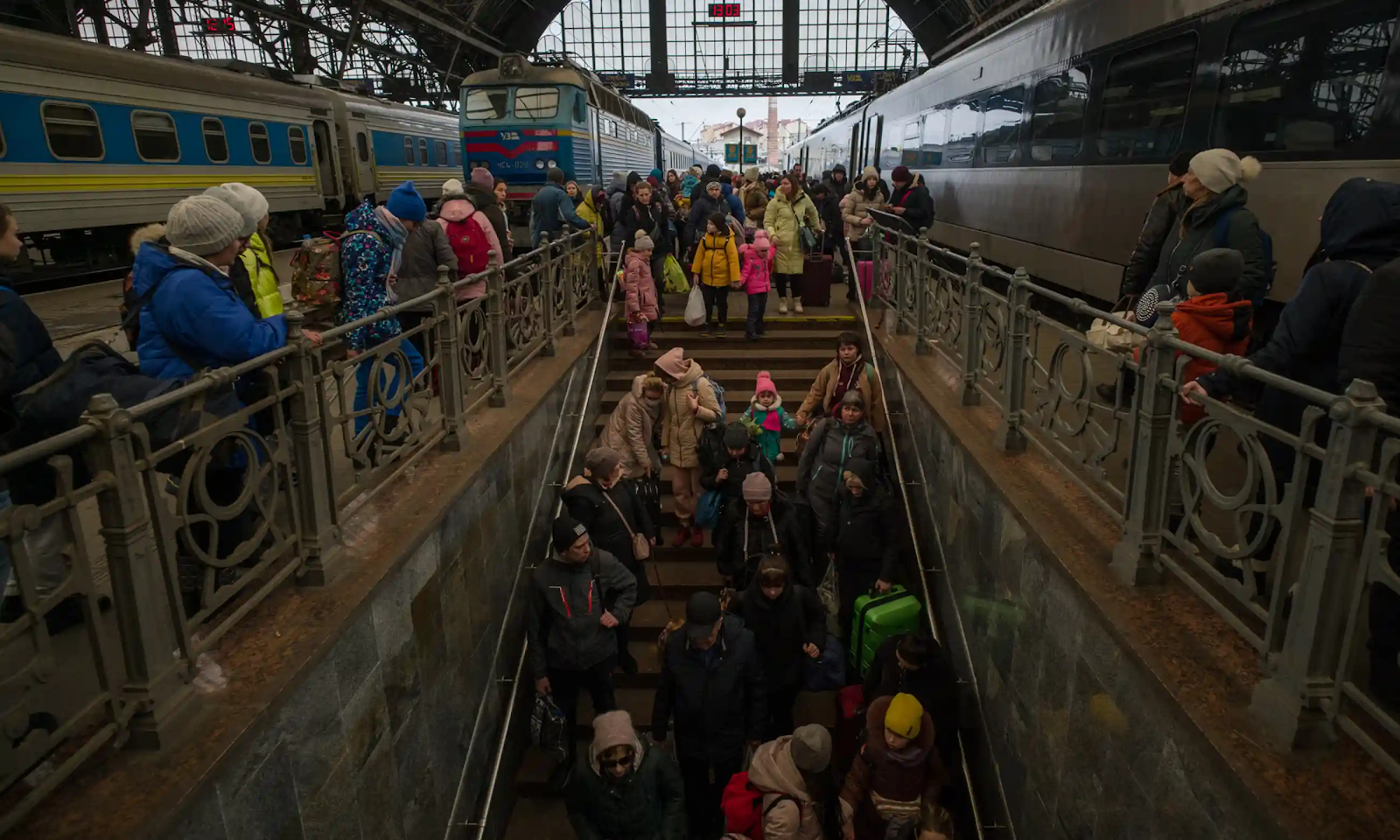
Read this impressive article in The Guardian about how people are taken by train to less dangerous places in Ukraine.
Click here: The people who keep the refugee trains running out of Ukraine
Vladimir's Putin's invasion of Ukraine has changed the world. We are living in new and more dangerous times - the post-Cold War era that began with the fall of the Berlin Wall is over.
Quentin Sommerville, one of the BBC's most experienced war reporters walked through the wreckage in Kharkiv recently and said of the Russian bombardment: "If these tactics are unfamiliar to you, then you haven't been paying attention."
If you want to have a very good overview of the history of the last few decades, read this very interesting article by Allan Little published in BBC news. It'll help you undertstand what has led us to this conflict.
