Mostrando entradas con la etiqueta culture. Mostrar todas las entradas

jueves, 10 de marzo de 2022

Colouring book salutes Nigeria's inspiring women

A Nigerian woman and her daughter have published a colouring book featuring prominent Nigerian women.

Notable and Notorious Nigerian Women is the brainchild of Nkei Oruche, a multi-disciplinary creative and head of the Afro Urban Society based in San Francisco, her nine-year-old daughter Ziora, and a Nigeria-based illustrator Amina Gimba.

The book profiles a series of women from various walks of life, including the first Nigerian woman to fly an airplane and the female doctor who treated the first Ebola patient.

"A colouring book was a way to make it more accessible to so many different people," Ms Oruche told the BBC's Focus on Africa.

Listen to the full interview from BBC Focus on Africa. When you get to the webpage, click in this section to hear the interview:


lunes, 18 de enero de 2021

Blue Monday

 Do you feel blue today? A bit under the weather? Well, it's blue Monday, so that must be the reason why you feel like this.

Read this article to get to know how this expression was created back in 2005, and the formula used to calculate it. Also, you'll see some tips to deal with this "difficult day."

Click here: Blue Monday - Days of the Year


jueves, 5 de noviembre de 2020

Let's go back to 1605. Guy Fawkes Day.


Remember, remember

The fifth of November

Gunpowder, treason and plot

There seems no reason

Why gunpowder treason

            Should ever be forgot


jueves, 17 de enero de 2019

Newspapers or tabloids

Have you ever wondered about the difference between a newspaper and a tabloid? Do you know how they deal with the news stories in The Guardian or The Sun? You have here a really interesting text to see clearly the differences between them.

In the world of print journalism, the two main formats for newspapers are broadsheets and tabloids. Strictly speaking, those terms refer to the size of such papers, but both formats also have colorful histories and associations. The difference between broadsheets and tabloids provides an interesting journalistic journey.

Broadsheet newspapers first appeared in 18th-century Britain after the government began to tax newspapers based on how many pages they had, making big papers with fewer pages cheaper to print than smaller, easier-to-hold ones, says Kath Bates, writing on the website Oxford Open Learning. She adds:
"As few people could read to the standard required of those early broadsheet editions, they soon became associated with the aristocracy and more well-to-do businessmen. Even today, broadsheet papers tend to be linked with a higher-minded approach to news-gathering and delivery, with readers of such papers opting for in-depth articles and editorials."
Bates adds that, by comparison, tabloid newspapers—perhaps due to their smaller size—have always been associated with shorter, crisper stories. Tabloids date to the early 1900s when they were referred to as "small newspapers," which contained condensed stories that were easily consumed by everyday readers. Tabloid readers traditionally came from the lower-middle and working classes, but that has changed in the past few decades, and it's also a bit of a misconception. The New York Daily News, the most widely circulated tabloid in the United States, for example, has won 11 ​Pulitzer Prizes, journalism's highest honor, as of June 2018. Still, even with the blurring of clear distinctions between the economic or class status of their readership, advertisers continue to target different markets when buying space in broadsheets and tabloids.

What Are Tabloids?

In the technical sense, tabloid refers to a type of newspaper that typically measures 11-by-17-inches, is usually no more than five columns across, and is narrower than a broadsheet newspaper. Since tabloids are smaller, their stories tend to be shorter than those found in broadsheets.
And while broadsheet readers tend to be upscale suburbanites, tabloid readers are often working-class residents of big cities. Indeed, many city dwellers prefer tabloids because they are easy to carry and read on the subway or bus.
One of the first tabloids in the U.S. was the New York Sun, started in 1833. It cost only a penny, was easy to carry, and its crime reporting and illustrations proved popular with working-class readers.
Tabloids tend to be more irreverent and slangy in their writing style than their more serious broadsheet brothers. In a crime story, a broadsheet will refer to a police officer, while the tabloid will call him a cop. And while a broadsheet might spend dozens of column inches on "serious" news—say, a major bill being debated in Congress—a tabloid is more likely to zero in on a heinous sensational crime story or celebrity gossip.
In fact, the word tabloid has come to be associated with the kind of supermarket checkout aisle papers—such as the National Enquirer—that focus on splashy, lurid stories about celebrities.
But there's an important distinction to be made here. True, there are the over-the-top tabloids, but there are also the so-called respectable tabloids, such as the New York Daily News, the "Chicago Sun-Times," and the "Boston Herald," that do serious, hard-hitting journalism. As noted, the "Daily News" has won nearly a dozen Pulitzers.
In Britain, tabloid papers—also known as the "red tops" for their front-page banners—tend to be much racier and sensationalistic than their American counterparts. Indeed, the unscrupulous reporting methods employed by some tabloids (or tabs) led to the so-called ​phone-hacking scandal and the closing of the News of the World, one of Britain's biggest tabs. The scandal has also resulted in calls for greater regulation of the press in Britain.

What Are Broadsheets?

Broadsheet refers to the most common newspaper format, which, if you're measuring the front page, is typically around 15 inches wide to 20 or more inches long in the U.S. (though sizes can vary around the world). Broadsheet papers are usually six columns across.
Broadsheets have come to be associated with a high-minded approach to the dissemination of news, as well as with an upscale readership. Even today, broadsheet papers tend to employ a traditional approach to newsgathering that emphasizes in-depth coverage and a sober tone in articles and editorials. Broadsheet readers are often fairly affluent and educated, with many of them living in the suburbs. Many of the nation's most respected and influential newspapers—The New York Times, The Washington Post, and The Wall Street Journal—are broadsheet papers.
However, in recent years many broadsheets have been reduced in size to cut printing costs. For instance, The New York Times was narrowed by 1 1/2 inches in 2008. Other broadsheet papers, including USA Today, The Los Angeles Times, and The Washington Post, have also been trimmed in size.

Broadsheets and Tabloids Today

Newspapers—whether broadsheets or tabloids—are experiencing difficult times these days. Readership has slipped for both types of newspapers as many readers have turned to the internet for their news. Readers can now easily obtain up-to-the-minute news from a variety of online sources, often for free. For example, AOL, an internet portal, offers online news articles on everything from mass shootings, Supreme Court decisions, and international issues to sports and weather events—all at no charge.
CNN, also known as Cable News Network, is known mostly for its on-air coverage of domestic and international issues. But the cable news service also has a well-established news website that provides free articles, and even video news clips, of nearly all major domestic and foreign news stories. It's difficult for broadsheets and tabloids to compete with organizations providing such wide-ranging and cost-free coverage, especially when papers have traditionally charged readers who want access to the news and information stories they offer.
Between 2000 and 2015, annual advertising revenue at all U.S. newspapers, both tabloids and broadsheets, tumbled from $60 billion to $20 billion, according to Derek Thompson writing in The Atlantic. And a Pew Research Center study noted that circulation for all U.S. newspapers—both print and digital—has fallen every year for the past three decades, including an 8 percent decline between 2015 and 2016.
The Pew Center study did note some positive gains, however, for the nation's largest broadsheet papers. The New York Times added more than 500,000 online subscriptions in 2016, the most recent year for which figures are available, a nearly 50 percent jump from the previous year. In that same period, The Wall Street Journal added more than 150,000 digital subscriptions, a 23 percent rise.

Online Changes

Of note, though, the online versions of those broadsheets are more tabloid-like in format; they are more linear and with flashier headlines than the print editions of these broadsheets for the same editions. For example, The New York Times online edition is only four columns wide, similar to a tabloid, though the second column tends to be wider than the other three.
The main headline for The New York Times online edition of June 20, 2018, was: "Trump Retreats After Border Outcry," which was splashed in flashy italic type above a main story and several sidebars about the public debate over a U.S. policy that separated parents seeking to enter the country from their children. The print edition for the same day—which, of course, was one news cycle behind the online edition—featured a much more sedate headline for its main story stating, "GOP Moves to End Trump's Family Separation Policy, but Can't Agree How."
As readers gravitate to briefer stories and instant access to news via the internet, broadsheets may begin to adopt tabloid formats online. To survive, the broadsheets—at least online—seem to be taking a page out of the tabloid playbook: brief stories, flashy headlines, attention-grabbing color, and more graphics. As technology increases the ability of readers to access news in an instant, newspapers may be moving to return to the format of the very first tabloids. The name of the game seems to be capture readers' attention with tabloid techniques rather than offering more in-depth broadsheet-like serious news stories.
By Tony Rogers, July 2018

jueves, 2 de noviembre de 2017

How to tell a raven from a crow

As an essential part of the Halloween celebrations, crows or ravens are everywhere. But what is the difference between these two similar birds? Click here to find out and listen to the different sounds they make:

Crow or raven

And now let's enjoy the famous poem by E.A. Poe:

Edgar Allan Poe

The Raven

[First published in 1845]
horizontal space Once upon a midnight dreary, while I pondered weak and weary,
Over many a quaint and curious volume of forgotten lore,
While I nodded, nearly napping, suddenly there came a tapping,
As of some one gently rapping, rapping at my chamber door.
`'Tis some visitor,' I muttered, `tapping at my chamber door -
Only this, and nothing more.'

Ah, distinctly I remember it was in the bleak December,
And each separate dying ember wrought its ghost upon the floor.
Eagerly I wished the morrow; - vainly I had sought to borrow
From my books surcease of sorrow - sorrow for the lost Lenore -
For the rare and radiant maiden whom the angels name Lenore -
Nameless here for evermore.

And the silken sad uncertain rustling of each purple curtain
Thrilled me - filled me with fantastic terrors never felt before;
So that now, to still the beating of my heart, I stood repeating
`'Tis some visitor entreating entrance at my chamber door -
Some late visitor entreating entrance at my chamber door; -
This it is, and nothing more,'

Presently my soul grew stronger; hesitating then no longer,
`Sir,' said I, `or Madam, truly your forgiveness I implore;
But the fact is I was napping, and so gently you came rapping,
And so faintly you came tapping, tapping at my chamber door,
That I scarce was sure I heard you' - here I opened wide the door; -
Darkness there, and nothing more.

Deep into that darkness peering, long I stood there wondering, fearing,
Doubting, dreaming dreams no mortal ever dared to dream before;
But the silence was unbroken, and the darkness gave no token,
And the only word there spoken was the whispered word, `Lenore!'
This I whispered, and an echo murmured back the word, `Lenore!'
Merely this and nothing more.

Back into the chamber turning, all my soul within me burning,
Soon again I heard a tapping somewhat louder than before.
`Surely,' said I, `surely that is something at my window lattice;
Let me see then, what thereat is, and this mystery explore -
Let my heart be still a moment and this mystery explore; -
'Tis the wind and nothing more!'

Open here I flung the shutter, when, with many a flirt and flutter,
In there stepped a stately raven of the saintly days of yore.
Not the least obeisance made he; not a minute stopped or stayed he;
But, with mien of lord or lady, perched above my chamber door -
Perched upon a bust of Pallas just above my chamber door -
Perched, and sat, and nothing more.

Then this ebony bird beguiling my sad fancy into smiling,
By the grave and stern decorum of the countenance it wore,
`Though thy crest be shorn and shaven, thou,' I said, `art sure no craven.
Ghastly grim and ancient raven wandering from the nightly shore -
Tell me what thy lordly name is on the Night's Plutonian shore!'
Quoth the raven, `Nevermore.'

Much I marvelled this ungainly fowl to hear discourse so plainly,
Though its answer little meaning - little relevancy bore;
For we cannot help agreeing that no living human being
Ever yet was blessed with seeing bird above his chamber door -
Bird or beast above the sculptured bust above his chamber door,
With such name as `Nevermore.'

But the raven, sitting lonely on the placid bust, spoke only,
That one word, as if his soul in that one word he did outpour.
Nothing further then he uttered - not a feather then he fluttered -
Till I scarcely more than muttered `Other friends have flown before -
On the morrow he will leave me, as my hopes have flown before.'
Then the bird said, `Nevermore.'

Startled at the stillness broken by reply so aptly spoken,
`Doubtless,' said I, `what it utters is its only stock and store,
Caught from some unhappy master whom unmerciful disaster
Followed fast and followed faster till his songs one burden bore -
Till the dirges of his hope that melancholy burden bore
Of "Never-nevermore."'

But the raven still beguiling all my sad soul into smiling,
Straight I wheeled a cushioned seat in front of bird and bust and door;
Then, upon the velvet sinking, I betook myself to linking
Fancy unto fancy, thinking what this ominous bird of yore -
What this grim, ungainly, ghastly, gaunt, and ominous bird of yore
Meant in croaking `Nevermore.'

This I sat engaged in guessing, but no syllable expressing
To the fowl whose fiery eyes now burned into my bosom's core;
This and more I sat divining, with my head at ease reclining
On the cushion's velvet lining that the lamp-light gloated o'er,
But whose velvet violet lining with the lamp-light gloating o'er,
She shall press, ah, nevermore!

Then, methought, the air grew denser, perfumed from an unseen censer
Swung by Seraphim whose foot-falls tinkled on the tufted floor.
`Wretch,' I cried, `thy God hath lent thee - by these angels he has sent thee
Respite - respite and nepenthe from thy memories of Lenore!
Quaff, oh quaff this kind nepenthe, and forget this lost Lenore!'
Quoth the raven, `Nevermore.'

`Prophet!' said I, `thing of evil! - prophet still, if bird or devil! -
Whether tempter sent, or whether tempest tossed thee here ashore,
Desolate yet all undaunted, on this desert land enchanted -
On this home by horror haunted - tell me truly, I implore -
Is there - is there balm in Gilead? - tell me - tell me, I implore!'
Quoth the raven, `Nevermore.'

`Prophet!' said I, `thing of evil! - prophet still, if bird or devil!
By that Heaven that bends above us - by that God we both adore -
Tell this soul with sorrow laden if, within the distant Aidenn,
It shall clasp a sainted maiden whom the angels name Lenore -
Clasp a rare and radiant maiden, whom the angels name Lenore?'
Quoth the raven, `Nevermore.'

`Be that word our sign of parting, bird or fiend!' I shrieked upstarting -
`Get thee back into the tempest and the Night's Plutonian shore!
Leave no black plume as a token of that lie thy soul hath spoken!
Leave my loneliness unbroken! - quit the bust above my door!
Take thy beak from out my heart, and take thy form from off my door!'
Quoth the raven, `Nevermore.'

And the raven, never flitting, still is sitting, still is sitting
On the pallid bust of Pallas just above my chamber door;
And his eyes have all the seeming of a demon's that is dreaming,
And the lamp-light o'er him streaming throws his shadow on the floor;
And my soul from out that shadow that lies floating on the floor
Shall be lifted - nevermore!

miércoles, 26 de abril de 2017

Theatre in Italian

Are you free on Thursday evening?
Would you  like to have a good time?

Take your family or friends to watch a funny play here, in Las Rozas, organized by the Italian Department. Even if you don't speak Italian, you'll enjoy it. Guaranteed!

What play? VIA VIA, SI PARTE!
Where: Centro Cultural Pérez de la Riva (Calle Principado de Asturias, 28, Las Rozas)
When? Thursday 27th April
What time? 19:00

And it is free!!


jueves, 9 de febrero de 2017

miércoles, 26 de octubre de 2016

How Spanish got its 'ñ'

You can see here an interesting video to see how we got the letter 'ñ' in our alphabet.
Thanks a lot, Javier!


jueves, 13 de febrero de 2014

Celebrating the life of Abraham Lincoln


“Fellow citizens, we cannot escape history. We of this Congress and this administration will be remembered in spite of ourselves. No personal significance or insignificance can spare one or another of us. The fiery trial through which we pass will light us down in honor or dishonor, to the latest generation. We – even we here – hold the power and bear the responsibility.”

Steve Emberrom  from VOA Learning English, speaks about Abraham Lincoln, the 16th president of the United States born on  February 12th.

To read and listen to this interesting article, click here:

Abraham Lincoln


martes, 28 de enero de 2014

Santa Lucia Island

Thanks to Manuel, we can get to know something about St Lucia Island, which is in the Caribbean Sea. This is the one where one on the ladies at the bakery comes from.
I hope you find it interesting.


I wouldn't mind giving it a try!

jueves, 21 de noviembre de 2013

Oxford Dictionaries Word of the Year 2013 SELFIE


SELFIE

is named Oxford Dictionaries Word of the Year 2013

selfie noun, informal
(also selfy; plural selfies)
a photograph that one has taken of oneself, typically one taken with a smartphone or webcam and uploaded to a social media website
19 November 2013, Oxford, UK:
Today Oxford Dictionaries announces selfie as their international Word of the Year 2013. The Oxford Dictionaries Word of the Year is a word or expression that has attracted a great deal of interest during the year to date. Language research conducted by Oxford Dictionaries editors reveals that the frequency of the word selfie in the English language has increased by 17,000% since this time last year.
Selfie can actually be traced back to 2002 when it was used in an Australian online forum.  The word gained momentum throughout the English-speaking world in 2013 as it evolved from a social media buzzword to mainstream shorthand for a self-portrait photograph. Its linguistic productivity is already evident in the creation of numerous related spin-off terms showcasing particular parts of the body like helfie (a picture of one’s hair) and belfie (a picture of one’s posterior); a particular activity – welfie (workout selfie) and drelfie (drunken selfie), and even items of furniture – shelfie and bookshelfie.
Judy Pearsall, Editorial Director for Oxford Dictionaries, explained the decision: “Using the Oxford Dictionaries language research programme, which collects around 150 million words of current English in use each month, we can see a phenomenal upward trend in the use of selfie in 2013, and this helped to cement its selection as Word of the Year.”
The Word of the Year need not have been coined within the past twelve months, but it does need to have become prominent or notable in that time. Selfie was added to OxfordDictionaries.com in August 2013, although the Word of the Year selection is made irrespective of whether the candidates are already included in an Oxford dictionary. Selfie is not yet in the Oxford English Dictionary (OED), but is currently being considered for future inclusion.

The earliest known selfie

Research shows the word selfie in use by 2002. The earliest known usage is found in an Australian online forum post:
2002 ABC Online (forum posting) 13 Sept.
“Um, drunk at a mates 21st, I tripped ofer [sic] and landed lip first (with front teeth coming a very close second) on a set of steps. I had a hole about 1cm long right through my bottom lip. And sorry about the focus, it was a selfie.”

The rise of the selfie

Judy Pearsall explained the evolution of the word selfie: “Social media sites helped to popularize the term, with the tag ‘selfie’ appearing on the photo-sharing website Flickr as early as 2004, but usage wasn’t widespread until around 2012, when selfie was being used commonly in mainstream media sources.
“In early examples, the word was often spelled with a -y, but the -ie form is more common today and has become the accepted spelling. The use of the diminutive -ie suffix is notable, as it helps to turn an essentially narcissistic enterprise into something rather more endearing. Australian English has something of a penchant for -ie words – barbie for barbecue, firie for firefighter, tinnie for a can of beer – so this helps to support the evidence for selfie having originated in Australia.”

If you found the article interesting and you'd like to know something else about 

The Word of the Year shortlist,

click here:  Selfie

jueves, 16 de mayo de 2013

A touchy subject

Thanks to my colleague Irene, I post here a very interesting article about how foreigners see us, Spaniards, and our "touchy culture" from the magazine InMadrid.

Read the article and leave your opinion in comments.

A touchy subject


miércoles, 24 de abril de 2013

RSA Animate

This is another interesting video by Sir Ken Robins but with visual support. So it's much easier to follow his ideas about learning. Enjoy it!


domingo, 14 de abril de 2013

Sir Ken Robinson: Bring on the learning revolution!

Ken Robinson
 
Creativity expert Sir Ken Robinson challenges the way we're educating our children. He champions a radical rethink of our school systems, to cultivate creativity and acknowledge multiple types of intelligence.

Why you should listen to him


Why don't we get the best out of people? Sir Ken Robinson argues that it's because we've been educated to become good workers, rather than creative thinkers. Students with restless minds and bodies -- far from being cultivated for their energy and curiosity -- are ignored or even stigmatized, with terrible consequences. "We are educating people out of their creativity," Robinson says. It's a message with deep resonance. Robinson's TEDTalk has been distributed widely around the Web since its release in June 2006. The most popular words framing blog posts on his talk? "Everyone should watch this."

A visionary cultural leader, Sir Ken led the British government's 1998 advisory committee on creative and cultural education, a massive inquiry into the significance of creativity in the educational system and the economy, and was knighted in 2003 for his achievements.
"Ken's vision and expertise is sought by public and commercial organizations throughout the world."
BBC Radio 4
 
Listen to him at a TED conference (Technology, Entertainment and Design)


viernes, 5 de abril de 2013

Stand-up comedy in Madrid!


If you like stand-up comedies and you want to give it a try in English, you don't need to go abroad.
Just a few euros and you can enjoy the spectacle and some beers in the centre of Madrid.

Click here for more information


Freshly Comedy


miércoles, 3 de abril de 2013

And more about Lincoln, the film


Here you can read this article published in the New Yorker last December, before the 85th Academy Awards. You may find it interesting.

Article about Lincoln


jueves, 14 de febrero de 2013

JOHN CARLIN. CV


JOHN CARLIN
Born London, 12 May 1956

2011
Book on Rafael Nadal titled “Rafa: my story” co-authored with Nadal.

2004-2010
Book on Nelson Mandela titled ‘Playing the Enemy’ "Invictus" (Penguin Press USA; Atlantic Books, UK/SA/Commonwealth) first published in August 2008, translated into 14 languages, made into a Warner Bros film named ‘Invictus’, 2009 in the US, starring Morgan Freeman and Matt Damon, directed by Clint Eastwood. Released in December 2010 in USA. Released in Europe and the rest of the world in January and February 2010

Senior international writer for El País, the world’s leading newspaper in the Spanish language
Articles for the London Observer, Independent, Sunday Times, New York Times and others
Release of film ‘Die Hard 4’, starring Bruce Willis, based on article in ‘Wired’ magazine in the US, whose rights I sold to 20th Century Fox
 
2004
Published two books, “Heroica Tierra Cruel” (Seix Barral), on Africa, foreword written by Nelson Mandela; and “White Angels” (Bloomsbury) on Real Madrid, published in Britain, Spain, the United States, China, Japan and Brazil
Finalist for 2004 “William Hill British Sports Book of the Year”
Winner 2004 British Press Awards “Food and Drink Writer of the Year”
 
1998-2003
Winner in 2000 of the top Spanish journalism award, the Ortega y Gasset prize, for article on immigration for el País.
Articles for the London Independent; London Daily Telegraph; the London Observer; New Statesman; New York Times, Time magazine, the Wall Street Journal, Folha de Sao Paulo and others.
Interviewer and writer of Emmy-nominated PBS (USA) ‘Frontline’ documentary, ‘the Long Walk of Nelson Mandela’; script writer and consultant for Channel Four television documentary, ‘Kicking the Habit’, on Diego Maradona; interviewer and consultant for Channel Four televisions documentary on England-Argentina soccer rivalry
 
1995-1998
US bureau chief, based in Washington, for the (London) Independent on Sunday.
Articles for Wired; Spin; Conde Nast Traveler; Punch; New Statesman.
Weekly columnist for South Africa’s Sunday Independent.
 
1989-1995
South Africa bureau chief, based in Johannesburg, for the London Independent; three nominations for British foreign correspondent of the year award
Freelance articles for New Republic and others.
A number of TV and radio documentaries for the BBC on Winnie Mandela (Sony Award winner Best Radio documentary), South Africa’s “Third Force” and other topics.
 
1986-1989
Mexico and Central America bureau chief for the London Independent, based in Mexico City and Managua.
BBC radio documentaries on various subjects.
 
1982-1986
Correspondent for Times of London, BBC World Service, ABC Radio (US), CBC Radio (Canada), Toronto Star covering Mexico and Central America, based in Mexico City and,in 1984, San Salvador.
 
1981-1982
Sports reporter, film critic and political writer for Buenos Aires Herald, Argentina.

After this breathtaking CV, you'll probably like to know something else about John Carlin.
If so, click here:

John Carlin's official webpage


martes, 12 de febrero de 2013

INVICTUS


INVICTUS


Out of the night that covers me,
Black as the pit from pole to pole,
I thank whatever gods may be
For my unconquerable soul.

In the fell clutch of circumstance
I have not winced nor cried aloud.
Under the bludgeonings of chance
My head is bloody, but unbowed.

Beyond this place of wrath and tears
Looms but the Horror of the shade,
And yet the menace of the years
Finds and shall find me unafraid.

It matters not how strait the gate,
How charged with punishments the scroll,
I am the master of my fate:
I am the captain of my soul.


This is a Poem 'Invictus' (Unconquered, Undefeated) by William Henley. Great South African Leader Nelson Mandela (Madiba) was inspired by the poem, and had it written on a scrap of paper on his prison cell while he was incarcerated for 27 years on Robben Island.
 

"Invictus" is a short poem by the English poet William Ernest Henley (1849–1903). At the age of 12, Henley became a victim of tuberculosis of the bone.

A few years later the disease progressed to his foot, and physicians announced that the only way to save his life was to amputate directly below the knee.

In 1867 he successfully passed the Oxford local examination as a senior student.

In 1875 he wrote the "Invictus" poem from a hospital bed. It was first published in 1888 in Henley's Book of Verses, where it was the fourth in a series of poems entitled Life and Death (Echoes).

It originally bore no title. The familiar title "Invictus" (Latin for "unconquered") was added by Arthur Quiller-Couch when he included the poem in The Oxford Book of English Verse (1900)

Despite his disability, Henley survived with one foot intact and led an active life until the age of 53.

lunes, 28 de enero de 2013

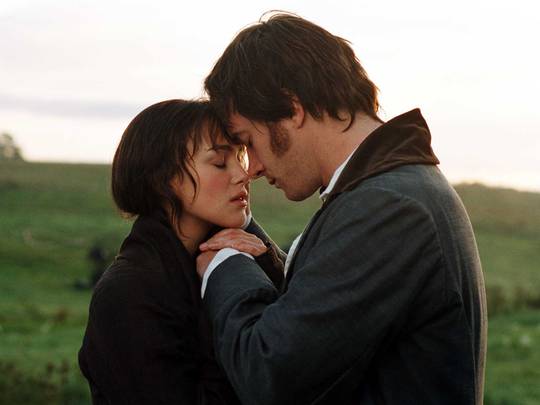
Pride and Prejudice: Jane Austen fans celebrate novel's 200th anniversary

"It is a truth universally acknowledged, that a single man in possession of a good fortune, must be in want of a wife."
 These are one of the most famous opening lines in the story of literature. The novel, Pride and Prejudice, was written by Jane Austen 200 hundred years ago. Today it is one of the novels which sells more copies in the UK and is studied and read all over the world.

Jane Austen

Jane Austen portrait

  • Jane Austen (1775-1817) was one of eight children in a close-knit family
  • Born on 16 December 1775 in the village of Steventon in Hampshire
  • In 1801 the family moved to Bath
  • After the death of her father, the family moved several times, eventually settling in Chawton, Hampshire
  • Her brother Henry negotiated with a publisher for her first novel, Sense and Sensibility
  • She described her next, Pride and Prejudice, as her "own darling child"
  • In 1816 Austen began to suffer from ill-health, thought to be Addison's disease. She died in Winchester a year later, aged 41
  • Her legacy was six celebrated novels, which offered insight into the lives of middle- and upper-class women in the early 19th Century
  • Source: BBC History
Click here to read an interesting article about the way her fans celebrate this important anniversary.